
Cultivating Growth: The Endless Benefits of Teaching Children About Gardening and Food Preservation
- bringingitbacktoba
- Jul 27, 2024
- 8 min read

Welcome, fellow homeschoolers and homeschool families, to another insightful post on our journey of nurturing young minds. Today, we're digging into the fertile soil of gardening and food preservation, exploring why these timeless skills are invaluable for children of all ages.
If you want to skip ahead to get the links to my favorite Gardening/Homesteading Unit Studies and resources - CLICK HERE!
Or read on to learn more about why Gardening and Homesteading skills are so valuable in your homeschool.
Planting Seeds of Knowledge: Why Gardening Matters for Young Children
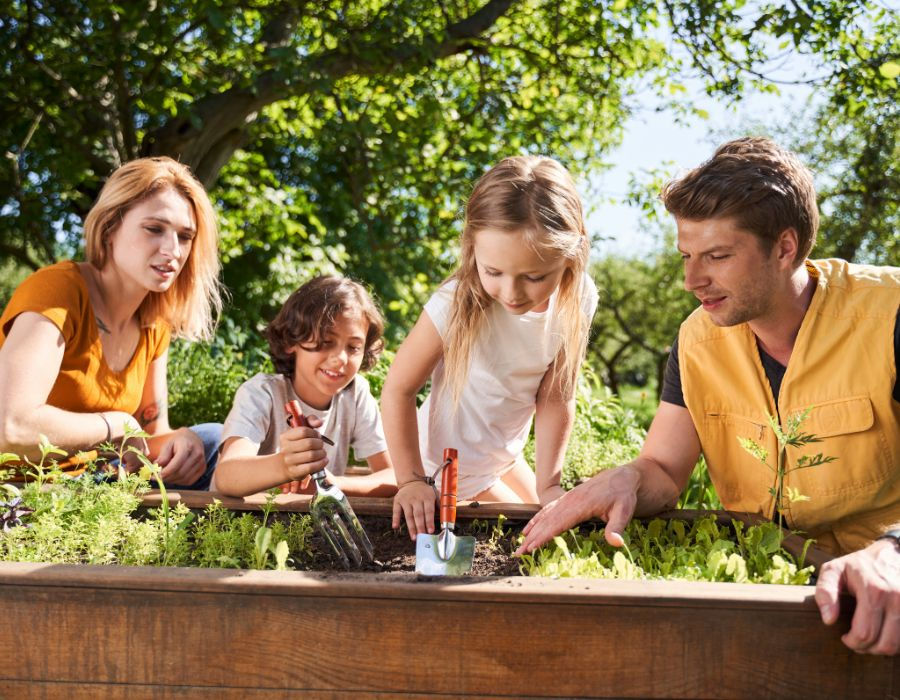
First and foremost, as many homeschoolers will tell you, for our little ones, gardening is more than just a hobby—it's a hands-on classroom where they learn through every seed planted, nurtured, and cultivated. There are endless opportunities for learning in the garden if you open yourself up to find them. Learning in the garden can truly be as open ended as you choose, another beautiful aspect of it. However, if you are someone who desires a little more structure and direction, or your child learns best in that manner, there are also some amazing and comprehensive Unit Study style curricula out there – More on those later.
Here's why, in my opinion as a homeschooling gardener, it's crucial to introduce gardening to your children of all ages:

Connecting with Nature: In today's tech-driven world, fostering a connection with the natural world is essential. Gardening allows young children to get their hands dirty, interact with living organisms, and develop an appreciation for the environment, and gets them curious to ask questions and make observations about the world around them.
Learning Responsibility: Caring for plants teaches children about responsibility and the importance of nurturing living things. From preparing the soil and planting their first seeds to harvesting their first crops of flowers, children learn that plants need water, sunlight, and care to thrive. Gardening in this way also provides opportunities to explore and discuss disappointment when a plant doesn’t grow as expected—all are lessons that can translate into empathy and responsibility in other areas of life as they continue to grow and develop.
Exploring Science: Gardening is a living science lab. From understanding the life cycle of plants to observing the crucial role of pollinators and how to support them, children engage in hands-on scientific inquiry. Concepts like photosynthesis, soil composition, building compost, and plant anatomy come to life in the garden. My little ones love following along with their lifecycle charts to observe and discuss what stages their plants are in at any given time.
Healthy Eating Habits: Growing their own food can encourage children to eat more fruits and vegetables, and in a greater variety. When they witness and assist in the journey from seed to plate, they develop a deeper appreciation for fresh, nutritious food, laying the foundation for lifelong healthy eating habits. This process allows ample opportunities for parents to discuss healthy habits, balanced eating, and the importance of knowing where your food is coming from and what is being put on it. Plus, not much can really beat the look of pride on their faces when they know you’re eating THEIR veggies that they grew and harvested for dinner!
Nurturing Growth: Benefits for Older Children
As children grow older, their involvement in gardening also evolves, offering a myriad of benefits tailored to their developmental stage:

Life Skills: Gardening instills practical life skills such as planning, organization, and time management, scheduling and much more. Older children can take on more responsibility in the garden, learning to create planting schedules - focus on germination and expected growth times, maintain tools, and manage resources effectively - setting up water collection/drip-system to help provide water, etc. They can even assist in the garden design process if you’re building a new garden or rebuilding an existing one. Exploring and learning about companion planting, identifying the most environmentally supportive location for your garden, or even building and starting a compost bin.
Environmental Stewardship: Adolescence is a critical time for shaping attitudes towards the environment. By engaging in sustainable gardening practices, older children develop a sense of environmental stewardship and understand their role in conserving natural resources, their environment, and preservation of those resources.
Cultivating Independence: Gardening empowers older children to take initiative and make independent decisions. Whether it's experimenting with new plant varieties, hybridizing plant species, natural pest control, or troubleshooting other garden problems, they gain confidence in their ability to problem-solve and adapt to challenges, and hone their flexibility to “go with it” when things don’t go as planned.
Entrepreneurial Spirit: For teenagers, gardening can spark a passion for various entrepreneurial endeavors. From selling excess produce or cut flowers at local markets or your own garden stand, to starting a community garden project, to donating food for those less fortunate, or even leading their own gardening classes within their community, they learn valuable lessons in entrepreneurship, marketing, and collaboration, and giving back.
Harvesting the Rewards: Food Preservation Skills
Beyond the joy and pride of watching seeds sprout and plants flourish, teaching children about food preservation adds another layer of valuable learning and self-sufficiency:

Reducing Food Waste: Food preservation techniques like canning, freezing, cultivating seeds and scraps, and drying empower children to reduce food waste by extending the shelf life of fresh produce. They can learn about the values of resourcefulness, creativity, and sustainable consumption.
Creativity: Preserving food opens up a world of creativity in food. Children can experiment with making jams, pickles, and sauces, exploring different flavor combinations and cultural traditions.
Life-Long Learning: Mastering food preservation skills equips children with a practical, lifelong tool. Whether they're preserving surplus from the garden or experimenting with new recipes, they carry this knowledge forward into adulthood and set the stage for living a more intentionally sustainable lifestyle with less overall waste, and fostering a preparedness mindset.
So, what’s the best way to teach these invaluable skills and deep dive into the world of horticulture and cultivation? It can really be as formal or informal as you’d like - there is no right or wrong, just what's right FOR YOU. For families that follow a more unschooling methodology for homeschooling, it may look like just getting out there and letting your child lead the way and having guided discussions, and first hand experience teachings as you go. Plan the garden space, cultivate the land, plant the seeds, research companion planting for natural pest control, counting seeds, counting plants that sprout and calculating ratios, research what soil needs to be healthy, make compost system, water and care for the plants, document growth stages, troubleshoot any issues that arise (i.e. bugs or birds getting your plants), harvest, cook or preserve, etc. The possibilities for learning are really as endless as your imagination.
For those who are more comfortable with a structured learning plan, or for those whose children learn better in that way, fear not, there are some amazing homeschooling learning resources out there! These are what I use and love for my family and my sometimes overwhelmed brain. The best part? My kids love them as much as I do. What are these awesome resources? Unit Studies!

The Unit Studies we use are primarily from For the Love of Homeschooling and Harbor & Sprout. To read more about why we love these curriculum options in our homeschool, check out this blog post reviewing my favorite curricula.
Starting with For the Love of Homeschooling, they have an array of garden theme printables and units for all ages. My favorites that we’ve used are the Seeds and Planting Nature Study Unit from the Nature Study Club - a subscription program that delivers a new Nature Study to my email each month at almost 50% off the retail price of purchasing independently. When you’re using them as much as we do, it’s definitely worth it! We have also loved the G is for Garden Early Learning Pack, FULL of engaging activities for your youngest learners, and also perfect for morning basket activities.

The Seeds & Planting Nature Study is an immersive look at all things gardening and planting. Full of language arts, STEM, reading, crafts, play, worksheet activities and more, all around the central theme of gardening. As with each Nature Study, this unit comes with a full teacher’s manual with daily readings, writing and discussion prompts, activities and more, A watercolor painting lesson tutorial, and 4 distinct levels of student workbooks to suit children from ages 4 all the way to 13 and older. What I love most about the family-style set up, having multiple levels of workbooks, is my kids of different ages can still learn the same topic together, at their own levels, we can mix and match activities if my child is a higher level in one subject over another, and I can reuse the same curriculum in the future at a higher level of study to build upon what we’ve already learned at the younger levels! The curriculum is yours to do what you wish, and use as much or however often you like for as long as you’re homeschooling, and beyond.
The other Program I love in my homeschool is Harbor & Sprout. They offer a line of “Patchwork” studies that are formatted in a similar family style with 4 distinct levels of learning suitable for kids 3-13 and older. These units are beautifully curated, detailed and each unit covers 9 core subjects of: Science, Nature Study, Art, Music, Math, Language Arts, Writing, History, & Geography. For most of their Patchwork Studies they also offer corresponding Morning Baskets for the youngest learners and morning routines, and they are in the process of adding corresponding Secondary Level units, perfect for middle school through high school levels.

We have absolutely loved their Homesteading & Sustainable Living Patchwork Unit Study which you can find here. You get detailed lesson plans for 4 weeks of learning, broken down by subject. I love that this unit covers subjects of Art, Music, Math and Nature Study, along with the other core subjects. From food spoilage and mold to preservation and more; From history of homesteading to exploring the culture and traditions in Sweden, and learning about music and dance in gardening - This is a truly unique type of unit study. You can snag a free sample of their Patchwork Unit Studies here (sample is their mountaineering unit) to get a general idea of the layout and style of the Patchwork Studies.
If you’re more interested in just the Nature Study portion, Harbor & Sprout also offers this subject from their Patchwork Study as a 4 week stand alone unit. You can also find the Homesteading & Sustainable Living Morning Basket here.
Each of these programs has so many more options as well, and I will link some of those (and some favorites) below for you to check out if they sound interesting! Including a couple FREE samples of each to get a feel for the units before going all in, because if you’re anything like I was when I started looking for a new curriculum, you want to know you’ll get your money’s worth!
Additional Gardening/Growing/Homesteading Theme Unit Studies and Activity Packs We Love From These Programs:
Use Referral Code: BACKTONATURE to save at For The Love Of Homeschooling!
Fall Harvest & Homesteading Book List - FREE RESOURCE - FTLOH
Seeds & Planting Sample Pack - FTLOH
Homesteading Mini-Unit - FTLOH
Math In The Garden - FTLOH
Harvest Nature Study - FTLOH
Use Code: B2B10 to save a Harbor & Sprout!
In the garden, children of all ages can sow the seeds of curiosity, responsibility, and resilience. From curious and imaginative early childhood to the inquisitive and critical thinking of adolescence, gardening and food preservation offer a wealth of benefits that extend far beyond the boundaries of your backyard. So, roll up those sleeves, grab a shovel, and embark on this enriching journey of growth and discovery with your learners young and old. Happy gardening!
this post contains affiliate links, and as such, I may earn a small commission, at no additional cost to you, for qualifying purchases made through one of those links.


Comments